Family Center for Healthy Aging
The Family Center for Healthy Aging serves as the administrative hub for Saint Louis University's Geriatric Workforce Enhancement Program (GWEP), a federal initiative that provides training and education to improve older adult health care.
About the Geriatric Workforce Enhancement Program at SLU
GWEP improves health outcomes for older adults by building a workforce equipped to provide age-friendly, dementia-friendly care. The federal grant program is funded by the Health Resources and Services Administration, and SLU has been a grant recipient for more than three decades. Through the Family Center for Healthy Aging and with the help of community partners, University clinicians and researchers are able to grow and tailor GWEP to benefit older adults and their families in the St. Louis region and across Missouri — particularly in medically underserved and rural areas.
The GWEP team includes faculty and staff from SLU's School of Medicine, Trudy Busch Valentine School of Nursing, School of Social Work, and Doisy College of Allied Health Sciences. The grant also provides support for nine community partners, including urban and rural health care systems and aging service organizations.
Key Initiatives
GWEP supports and fosters age-friendly health systems — a designation from the Institute for Healthcare Improvement that is given to primary care sites and community organizations that reliably provide a set of four evidence-based elements of care known as the "4Ms":
- What Matters (aligning care with patient goals)
- Medication (reducing high-risk drugs)
- Mentation (preventing delirium, dementia and depression)
- Mobility (ensuring safe movement)
GWEP equips health care teams to implement the 4Ms, which guide assessment and care planning across a range of health care settings to ensure patient-centered care that aligns with each older adult patient's preferences.
Learn More About Age-Friendly Health Systems
4Ms Clinic
Beyond supporting community partners to implement the 4Ms, GWEP has established a 4Ms clinic within the SLU Family and Community Medicine Ambulatory Care Clinic. There, trained graduate students conduct 4Ms-focused assessments that are later used at Medicare annual wellness visits to guide discussion and treatment.
To learn more about developing an age-friendly 4Ms clinic, email [email protected].
GWEP delivers targeted dementia education and training focused on assessment, treatment and evaluation.
Dementia 360
Developed by GWEP co-director Max Zubatsky, Ph.D., the Dementia 360 Framework creates a visual depiction of dementia-friendly care determined by the professional's point of entry at each phase of disease progression (or lack thereof). At each phase, the framework highlights assessment, education and intervention options.
GWEP is currently developing a Dementia 360 practice skills video and accompanying training guide as a student and professional resource that can also be used in cognitive stimulation therapy training. The video and teaching modules will be available in spring 2026.
Cognitive Stimulation Therapy
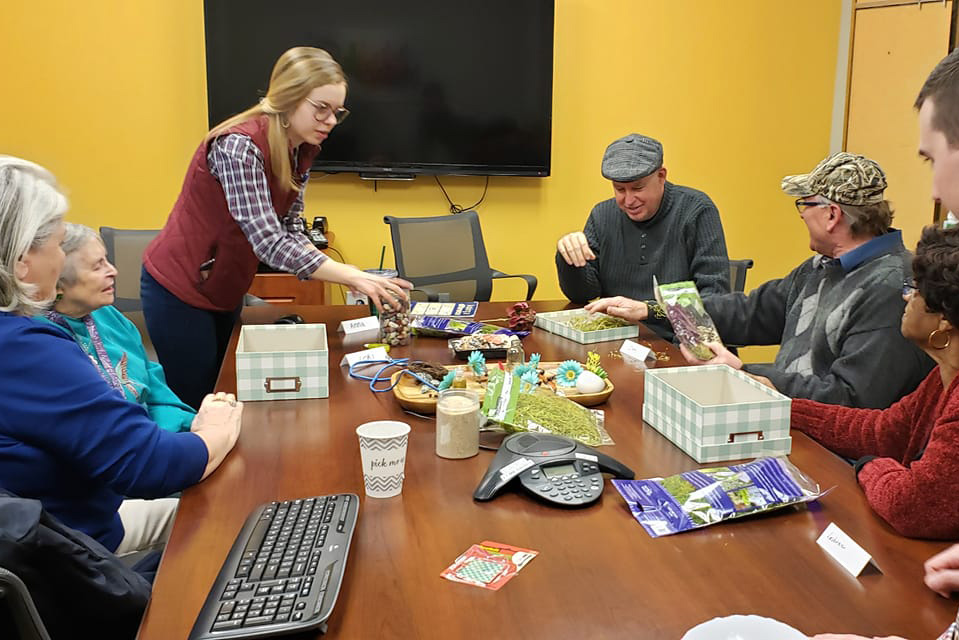
Cognitive stimulation therapy (CST) is an evidence-based treatment that improves cognition and mood for people with mild to moderate dementia. GWEP offers CST group sessions for older adults as well as advanced CST training through the North American Cognitive Stimulation Therapy Training Institute (NACSTTI).
GWEP addresses older adult loneliness and social isolation through community education and older adult support groups.
GWEP also prioritizes caregiver support through three primary offerings:
- Weekly caregiver process groups
- Monthly speaker series about topics related to caregiver health and well-being
- Training program for caregivers working with loved ones experiencing memory loss
CNA Apprenticeship
GWEP developed this year-long apprenticeship program for certified nursing assistants working in long-term care settings. The specialized training curriculum includes weekly 4Ms-focused lectures, age-friendly health systems video offerings, and mentorship from experienced CNAs and facility staff.
Throughout the program, apprentices will undergo regular assessments regarding their knowledge of and attitudes toward older adults. Upon completion of the apprenticeship, CNAs receive a geriatric specialist certificate.
To learn more about developing a CNA apprenticeship program, email [email protected].
ACT-ON
The Age-Friendly Change Tool for Older-Adult Needs (ACT-ON) is an easily administered screening tool that can be used for 4Ms assessments and person-centered care plans. ACT-ON ensures:
- Care aligns with patients' goals and preferences.
- Age-friendly care guidelines are used to assess patients' status over time.
- Patients' early warning signs are identified and addressed.
- Patients' whole care teams — including families — are involved.
GWEP prioritizes interprofessional geriatrics training and education for students, residents, fellows, faculty and preceptors. Opportunities include:
- The SLU Mobile Health Clinic, which provides geriatric clinical services in the community
- The Geriatric Case Competition, one of the University's largest interdisciplinary learning experiences
- A clinical externship offering hands-on experience with older adult patients in medical, mental health and community care settings
Leadership
- Marla Berg-Weger, Ph.D.
Program director - Max Zubatsky, Ph.D.
Program co-director - Kailyn Lyles
Project coordinator
GWEP Video Library
The SLU Family Center for Healthy Aging video library offers 4Ms-focused content for older adults, caregivers and all levels of health care providers. Find videos of live presentations, lectures, professional development opportunities and more.
Additional GWEP-produced videos are available on the Gateway Geriatric Education Center and Memory Care Home Solutions channels.